

























Introduction to Butterfly Valve Technology
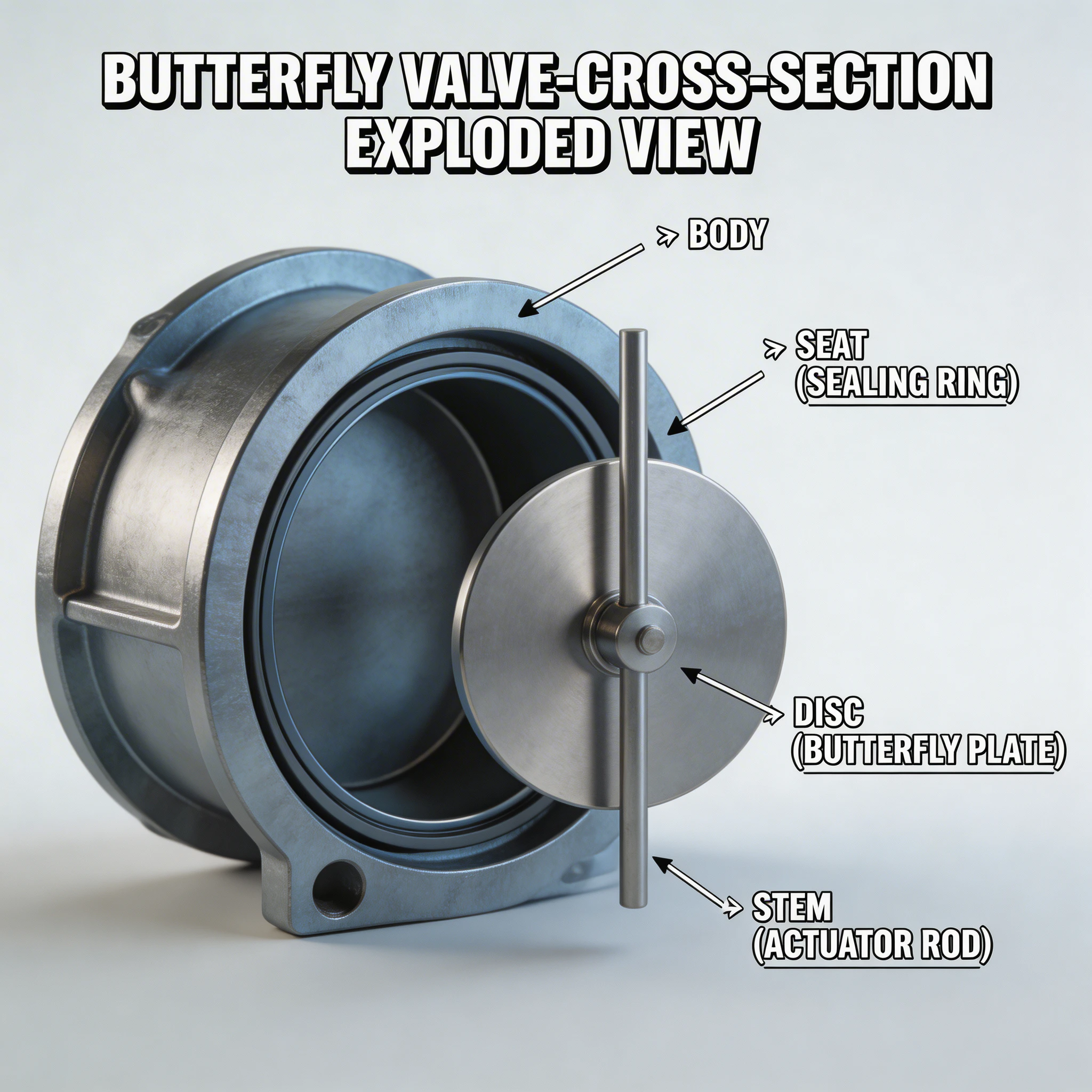
The butterfly valve represents one of the most efficient flow control solutions in modern industrial applications. Unlike traditional gate or globe valves, the butterfly valve operates on a quarter-turn principle that enables rapid flow regulation with minimal pressure drop. Understanding the working principle of butterfly valves helps engineers optimize system performance across water treatment, chemical processing, and HVAC applications.
The fundamental design consists of a circular disc mounted on a rotating shaft positioned in the center of the pipe. When the valve is fully open, the disc rotates parallel to the flow direction, presenting minimal resistance. This unique configuration allows butterfly valves to achieve flow coefficients significantly higher than other valve types of comparable size.
Core Working Principle and Flow Dynamics
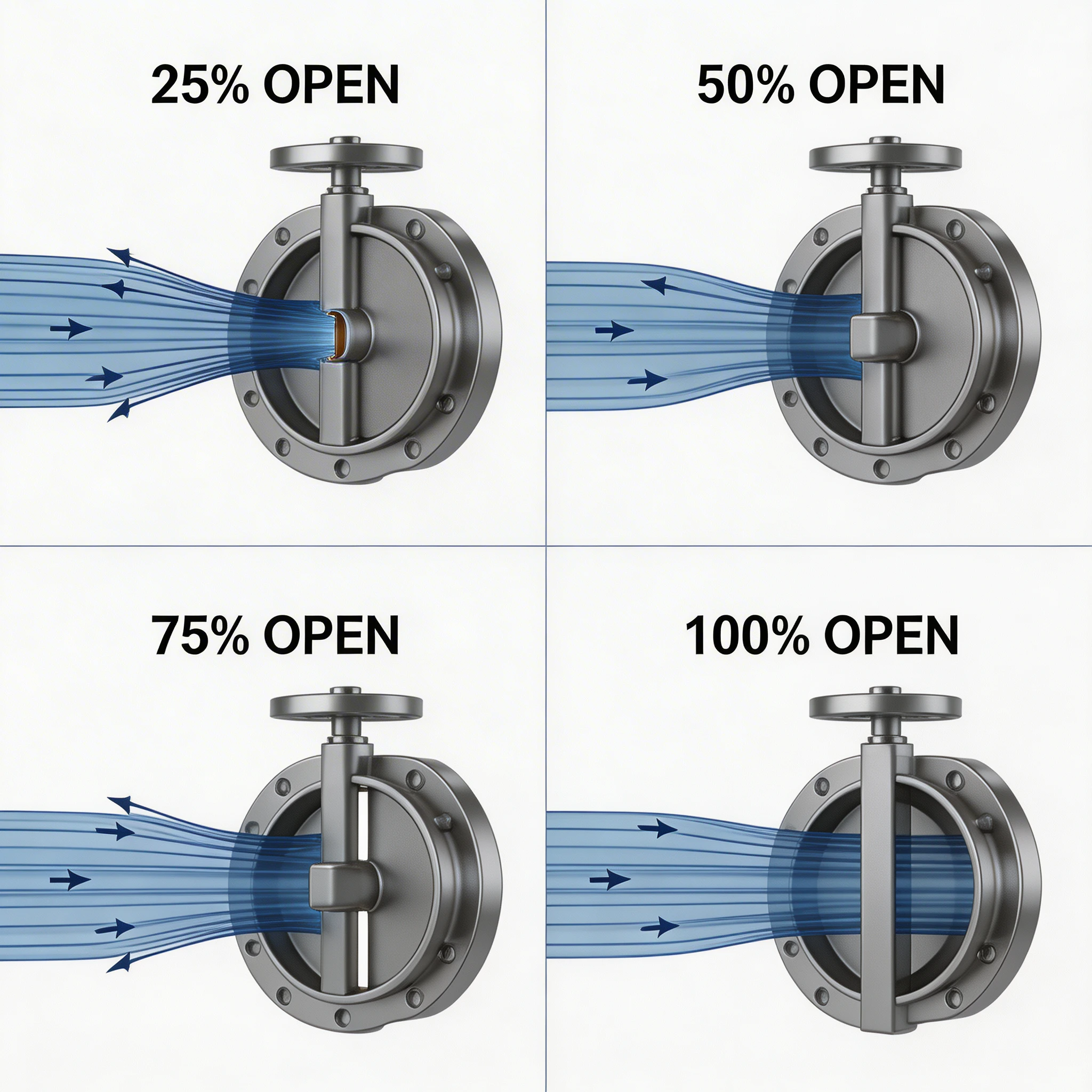
The working principle of a butterfly valve centers on the relationship between disc rotation angle and flow characteristics. As the disc rotates from the closed position (perpendicular to flow) toward the open position, several critical flow phenomena occur:
0-20 Degrees Opening: At small opening angles, the valve exhibits high flow resistance with significant pressure drop. The fluid must navigate around the partially exposed disc edge, creating turbulent zones downstream. This range is typically avoided for throttling applications due to potential cavitation and noise generation.
20-60 Degrees Opening: The optimal throttling range where precise flow control is achievable. The disc profile creates a predictable flow characteristic, allowing engineers to establish linear relationships between valve position and flow rate. Modern butterfly valves in this range can achieve control accuracies within ±2% of full scale.
60-90 Degrees Opening: Approaching full flow capacity with minimal pressure loss. At 90 degrees, the disc presents its thinnest profile to the flow, resulting in pressure drop coefficients as low as 0.3-0.5 depending on valve design and pipe configuration.
Types of Butterfly Valves and Their Applications
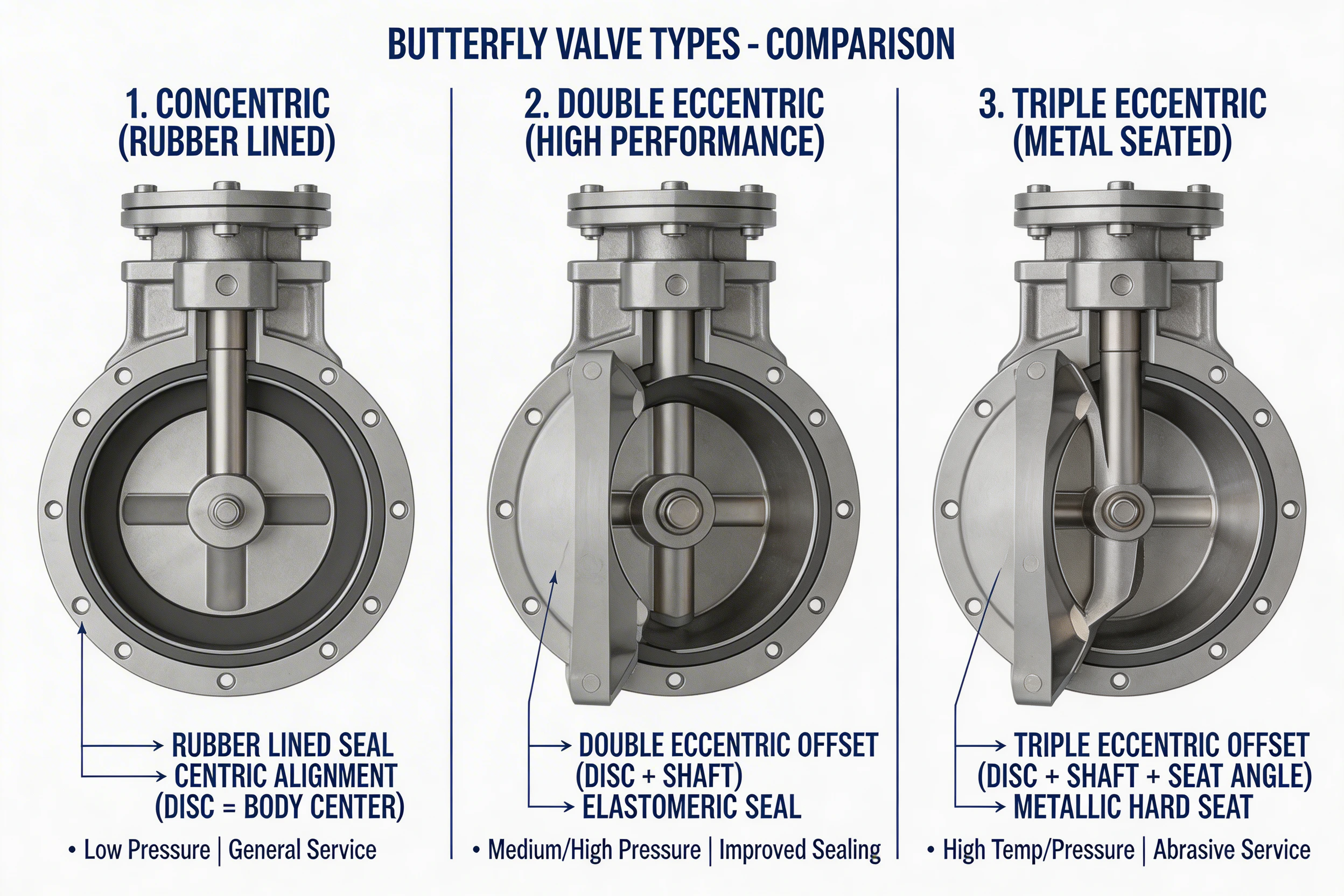
Engineers must select the appropriate butterfly valve type based on application requirements, pressure ratings, and media characteristics. Three primary designs dominate industrial markets:
Concentric Butterfly Valves: The traditional design features a disc centered on the shaft axis with a resilient rubber seat. These valves excel in low-pressure water applications up to 150 psi and temperatures below 200°F. The elastomer seat provides bubble-tight shutoff for clean media, making concentric valves ideal for water distribution and HVAC systems.
Double Offset (High Performance) Butterfly Valves: The shaft mounts offset from both the disc centerline and the pipe centerline. This geometry reduces seat wear by lifting the disc out of contact before rotation begins. Double offset valves handle pressures up to 740 psi and temperatures to 600°F with PTFE or metal seats, suitable for chemical processing and steam applications.
Triple Offset Butterfly Valves: Adding a third offset—the conical seat geometry—creates a camming action that achieves metal-to-metal sealing. These premium valves operate at pressures exceeding 1480 psi and temperatures to 1200°F, serving critical applications in power generation and oil and gas processing where zero leakage is mandatory.
Actuation Methods and Control Strategies
The working principle extends beyond the valve body to encompass actuation and control methodologies. Modern butterfly valves integrate with sophisticated automation systems through various actuation approaches:
Manual Actuation: Worm gear or lever operators suit applications requiring infrequent operation or where power sources are unavailable. Gear operators provide mechanical advantage for large valves, while lever operators enable rapid quarter-turn operation for smaller sizes.
Pneumatic Actuation: Air-powered actuators deliver fast response times (1-3 seconds) and inherent fail-safe capabilities through spring-return mechanisms. Double-acting pneumatic actuators suit high-cycle applications in process industries where valve positioning must respond quickly to control signals.
Electric Actuation: Motor-driven actuators provide precise positioning accuracy and compatibility with digital control systems. Modern smart actuators incorporate positioners, limit switches, and network communication protocols (Modbus, Profibus, Foundation Fieldbus) for integration with distributed control systems.
Pressure Drop and Flow Coefficient Analysis
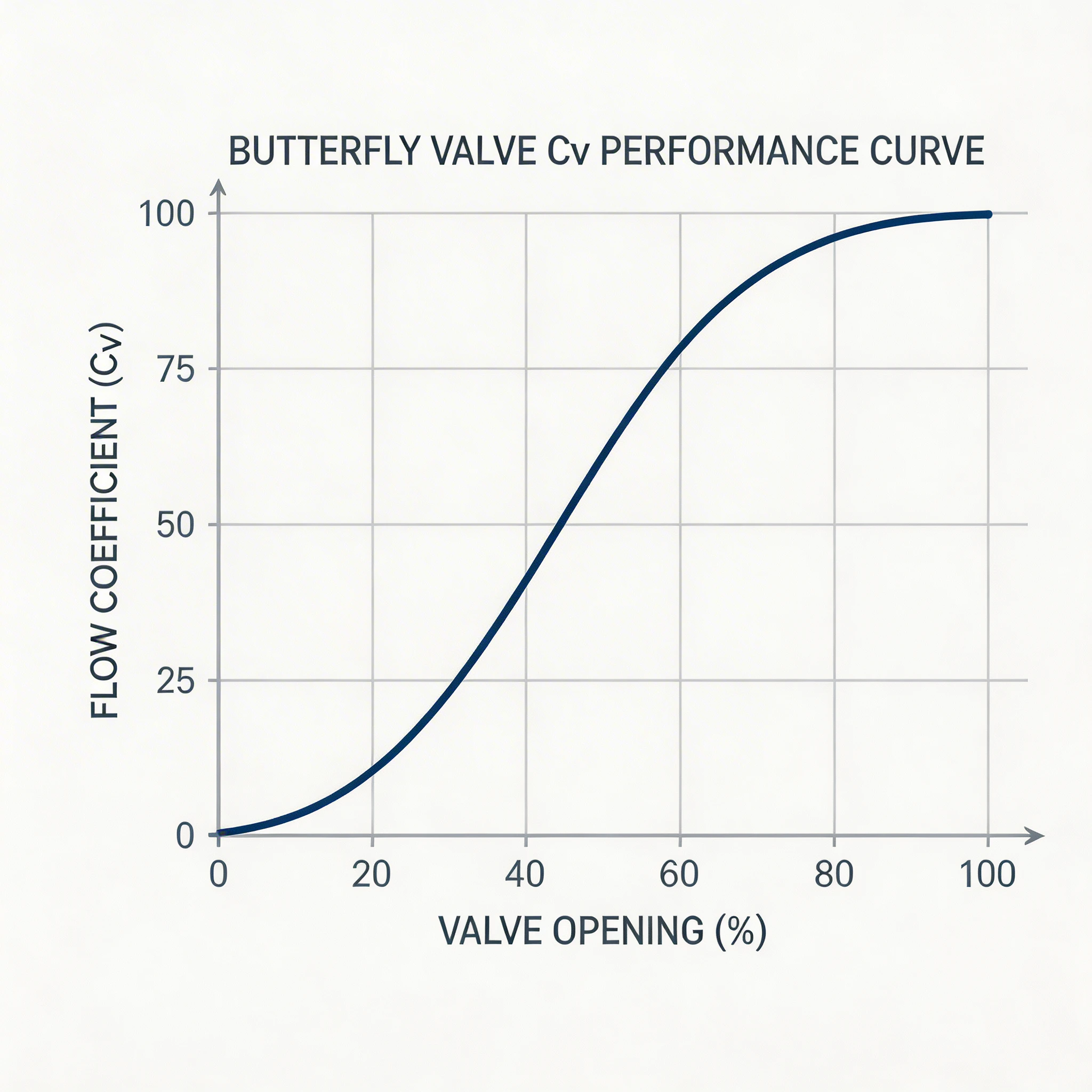
Engineering analysis of butterfly valve performance requires understanding flow coefficients (Cv) and pressure drop characteristics. The Cv value represents the flow rate in gallons per minute of water at 60°F that will pass through the valve with a 1 psi pressure drop.
Butterfly valves typically exhibit high Cv values relative to their face-to-face dimensions. A 6-inch butterfly valve may achieve Cv ratings of 1,500-2,000, compared to 400-600 for a comparable gate valve. This efficiency stems from the streamlined disc profile when fully open.
However, engineers must consider the non-linear flow characteristic. Unlike globe valves that provide linear flow response, butterfly valves exhibit equal percentage characteristics—small position changes at low openings produce large flow changes, while high openings produce minimal flow changes per degree of rotation. This characteristic requires careful controller tuning in throttling applications.
Installation Best Practices and Common Mistakes
Proper installation ensures butterfly valves achieve their design performance and service life expectations. Critical installation considerations include:
Orientation: While butterfly valves operate in any orientation, shaft horizontal with the disc hinge at the top prevents debris accumulation in the seat area for liquid applications. For gas service, shaft vertical may be preferred to minimize bearing wear.
Flange Compatibility: Butterfly valves require flat-face or raised-face flanges depending on seat design. Wafer-style valves fit between existing flanges, while lug-style valves enable dead-end service with removable downstream piping.
Piping Support: Unlike heavy gate or globe valves, butterfly valves do not provide significant pipeline rigidity. Independent piping support prevents stress transfer to the valve body that could distort the seat and cause leakage.
Maintenance Protocols and Troubleshooting
Preventive maintenance extends butterfly valve service life and ensures reliable operation. Recommended maintenance intervals vary by application severity:
Quarterly Inspection: Visual examination for external leakage, actuator air supply pressure (pneumatic systems), and electrical connections (electric systems). Exercise valves through full stroke to prevent seat compression set.
Annual Maintenance: Torque verification of flange bolts, lubrication of stem bearings and gear operators, and seat leak testing. Record baseline torque values for trend analysis.
Common Failure Modes: Seat deterioration from chemical attack or compression set, stem seal leakage from packing wear, and disc erosion from cavitation in high-differential throttling applications. Early detection through predictive maintenance prevents catastrophic failures.
Industry-Specific Applications and Case Studies
Butterfly valve working principles manifest differently across industrial sectors:
Water Treatment: Large-diameter butterfly valves (24-120 inches) control raw water intake and distribution. Rubber-lined designs resist corrosive water chemistries while providing bubble-tight isolation for filter backwash operations.
Chemical Processing: PTFE-lined or alloy-bodied butterfly valves handle aggressive acids and bases. Triple offset designs achieve API 598 zero-leakage standards for hazardous media containment.
Power Generation: High-performance butterfly valves regulate cooling water, steam condensate, and fuel gas. Triple offset metal-seated valves serve turbine bypass and isolation applications at elevated temperatures and pressures.
Conclusion: Selecting the Right Butterfly Valve
Understanding butterfly valve working principles enables engineers to specify optimal solutions for their applications. The quarter-turn operation, compact face-to-face dimension, and high flow capacity make butterfly valves the preferred choice for many on/off and throttling services.
Successful implementation requires matching valve type (concentric, double offset, triple offset) to pressure, temperature, and media requirements. Integration with appropriate actuation and control systems ensures the valve performs as intended throughout its service life. By following proper installation and maintenance protocols, butterfly valves deliver decades of reliable service across diverse industrial applications.