




























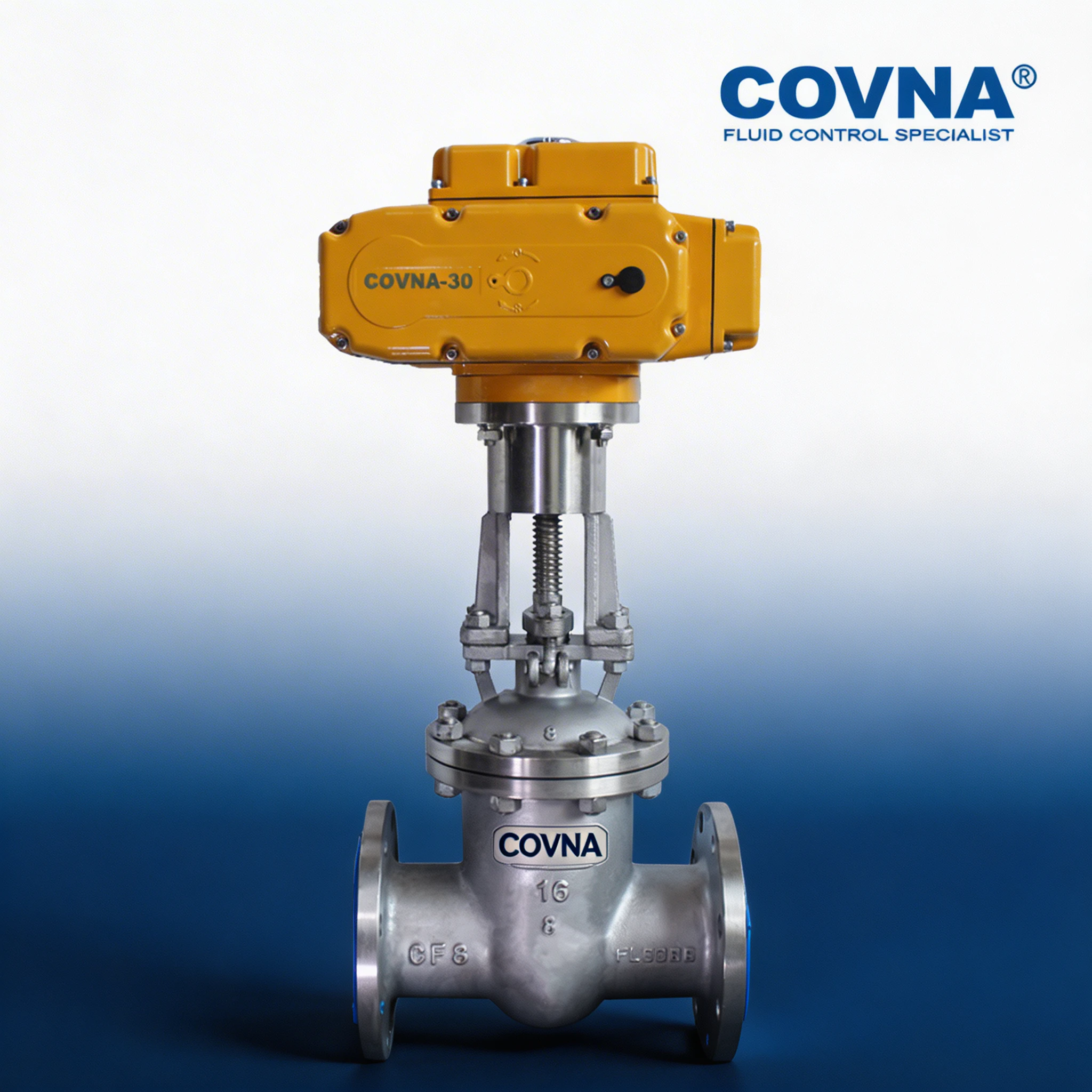
Globe Valve Types and Applications: Complete Engineering Guide for Industrial Systems
A globe valve is a linear motion valve designed primarily for throttling, regulating, and isolating fluid flow in pipelines. Characterized by its spherical body shape with an internal baffle separating the inlet and outlet ports, the globe valve employs a movable disk or plug that seats against a stationary ring to control flow. Unlike ball valves that excel in quick on/off operation, globe valves are optimized for precise flow control and frequent operation cycles. As a world-leading valve manufacturer with German technology origin and 26+ years of experience, COVNA has supplied over 5,000 industrial applications across 120+ countries, providing ISO 9001, CE, and RoHS certified globe valves for critical pipeline systems worldwide.
Introduction
Industrial fluid control systems demand precision, reliability, and durability. Among the various valve types employed across petroleum, chemical, power generation, and water treatment industries, globe valves stand out as the preferred solution for applications requiring accurate flow regulation and frequent operation. Understanding globe valve types and applications is essential for engineers, procurement professionals, and maintenance teams responsible for specifying and maintaining critical pipeline infrastructure.
The global industrial valve market continues to expand, driven by increasing energy demands, infrastructure modernization, and stringent environmental regulations. Within this landscape, globe valves maintain their position as fundamental components in process control systems. Their unique design characteristics make them indispensable for throttling service, where precise flow adjustment is required rather than simple on/off operation.
COVNA, established in 2008 with German engineering heritage, has developed comprehensive expertise in globe valve manufacturing. Our 26+ years of experience spans 5,000+ successful industrial applications across 120+ countries, providing us with unique insights into diverse operational requirements and industry-specific challenges. This engineering guide consolidates our technical knowledge to help you make informed decisions about globe valve selection, installation, and maintenance.
What is a Globe Valve?
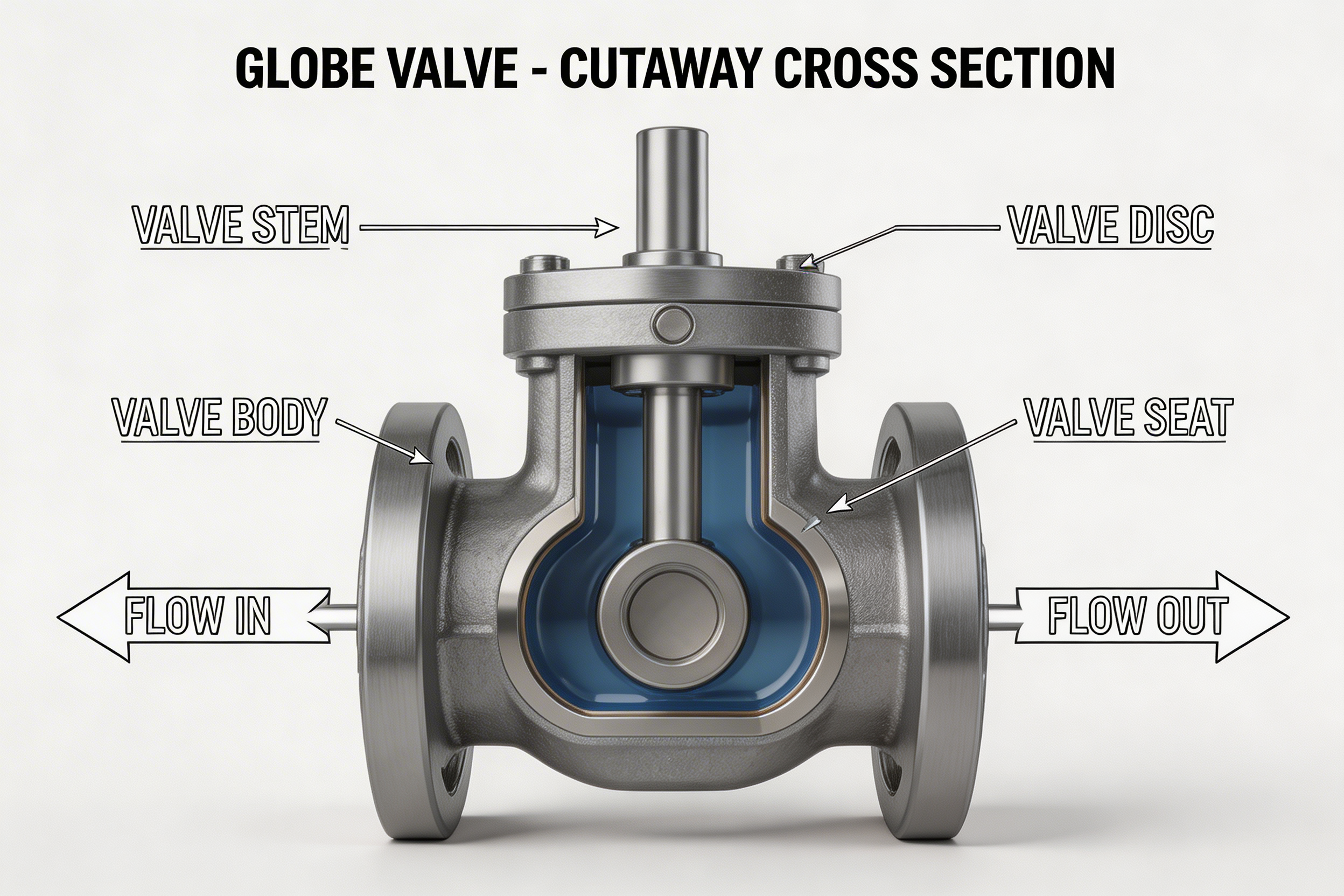
A globe valve derives its name from the globular shape of its valve body, which houses the internal components responsible for flow control. The defining characteristic of this valve type is the perpendicular arrangement between the fluid flow path and the valve stem movement. This configuration creates multiple directional changes in fluid flow, resulting in higher pressure drops compared to ball valves or check valves but enabling superior throttling capabilities.
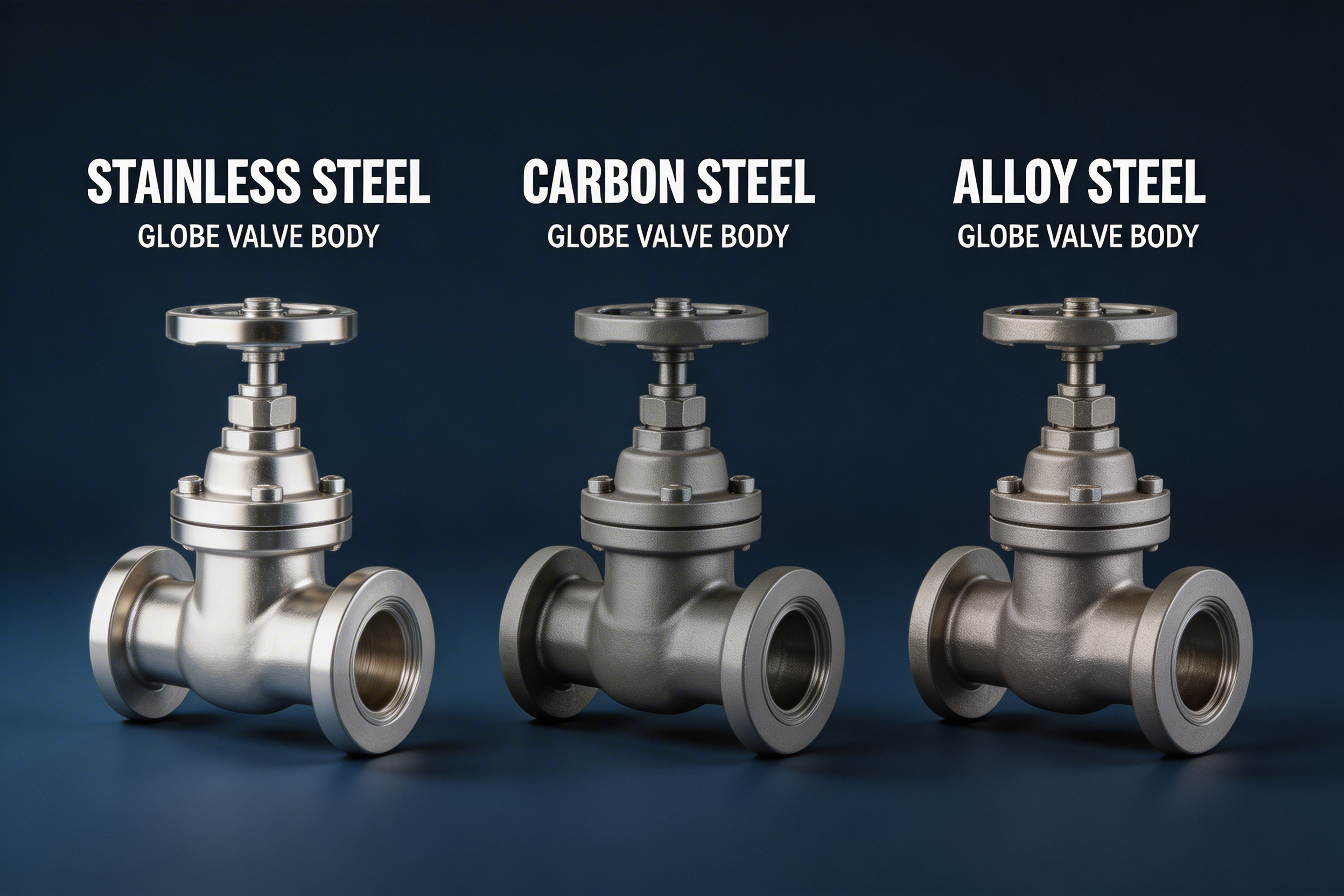
The fundamental construction consists of three primary components: the valve body, the bonnet, and the trim. The valve body provides the pressure boundary and flow path, typically manufactured from cast or forged steel, stainless steel, or specialized alloys depending on service conditions. The bonnet serves as the cover for the valve body and provides the mounting point for the stem and actuator assembly. The trim encompasses all internal components that come into contact with the flowing medium, including the disk (plug), seat ring, and stem.
| Feature | Description | Significance |
|---|---|---|
|
Body Configuration |
Spherical or globular shape with internal baffle |
Creates flow path with directional changes |
| Flow Direction | Typically bottom-to-top through seat | Reduces seat erosion and improves sealing |
| Stem Orientation | Perpendicular to flow direction | Enables precise linear motion control |
| Seat Design | Parallel or angled seating surfaces | Determines flow characteristics and sealing |
| Disk Types | Plug, composition, or needle configurations | Adapts valve for specific service conditions |
Globe Valve vs Gate Valve Comparison
When selecting valves for industrial applications, engineers often compare globe valves with gate valves. While both serve important functions in pipeline systems, their design philosophies and optimal use cases differ significantly.
| Characteristic | Globe Valve | Gate Valve |
|---|---|---|
|
Primary Function |
Throttling and flow regulation |
Full open/close isolation |
| Flow Resistance | High (multiple direction changes) | Low (straight-through flow) |
| Pressure Drop | Significant | Minimal when fully open |
| Operation Speed | Suitable for frequent operation | Designed for infrequent use |
| Sealing Capability | Good for low-pressure differentials | Excellent bidirectional sealing |
| Typical Applications | Control systems, bypass lines | Main isolation, pipeline sections |
Types of Globe Valves
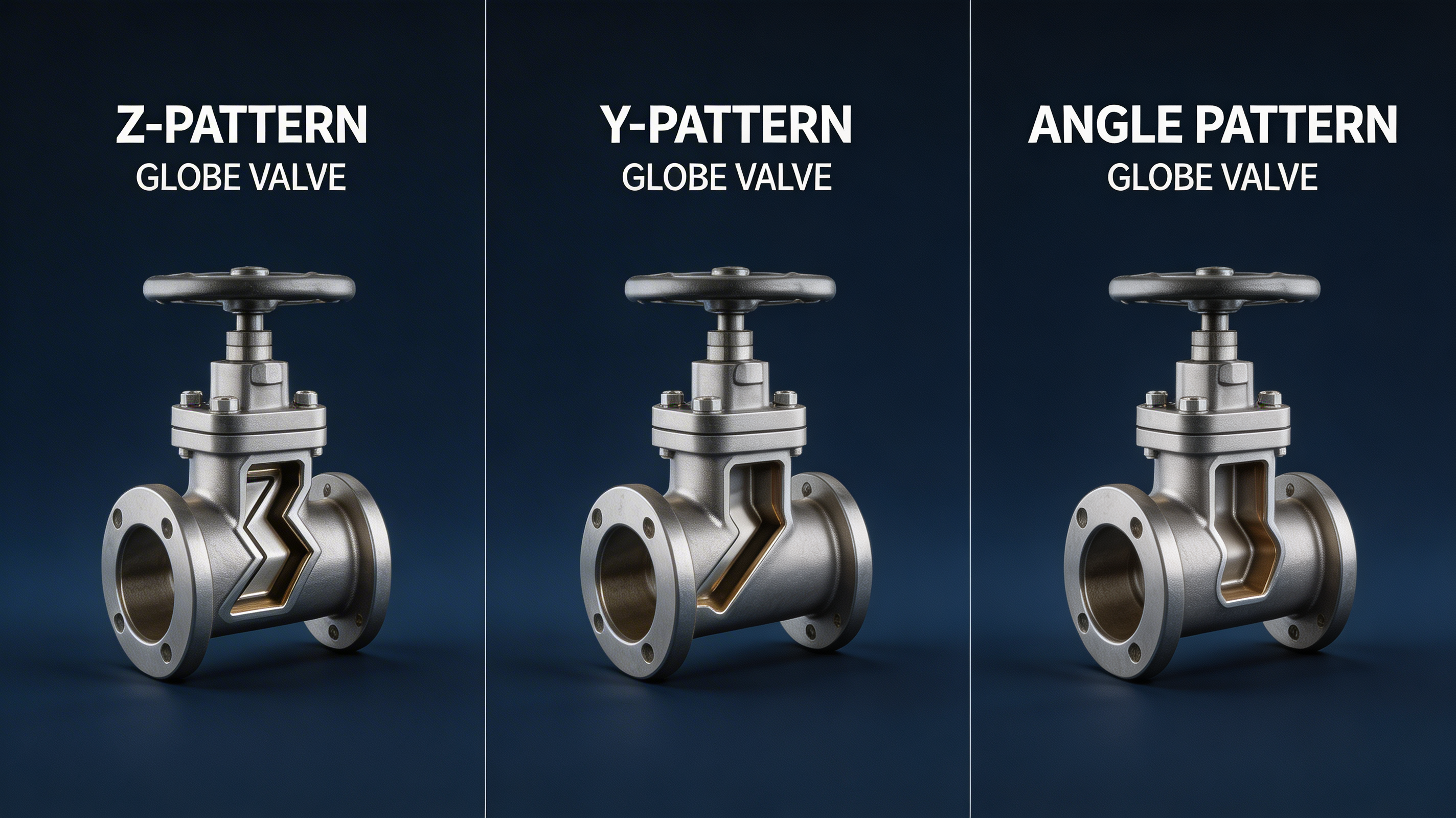
Globe valves are classified according to body configuration, which directly influences flow characteristics, pressure drop, and installation requirements. The three primary types—Z-type, Y-type, and Angle-type—each offer distinct advantages for specific applications. Understanding these variations is crucial for proper valve specification, similar to how butterfly valve selection requires knowledge of wafer vs lug configurations.
Z-Type Globe Valves
The Z-type, or standard pattern globe valve, represents the most common configuration. In this design, the inlet and outlet ports are aligned horizontally on opposite sides of the valve body, with the seat and disk positioned centrally. The stem enters from the top, perpendicular to the flow path, creating a Z-shaped flow pattern when viewed in cross-section.
Y-Type Globe Valves
Y-type globe valves feature an angled body design where the inlet and outlet ports form an angle of approximately 45 to 60 degrees, resembling the letter Y. This configuration reduces the number of flow direction changes compared to Z-type valves, resulting in lower pressure drop and improved flow capacity.
Angle-Type Globe Valves
Angle-type globe valves have inlet and outlet ports positioned at 90 degrees to each other, eliminating the need for an elbow fitting in piping systems. This configuration serves dual purposes: flow control and directional change.
| Type | Flow Pattern | Pressure Drop | Best Applications |
|---|---|---|---|
|
Z-Type |
Horizontal inlet/outlet |
High |
General throttling, steam systems |
| Y-Type | Angled 45-60 degrees | Medium | High-pressure, erosive fluids |
| Angle-Type | 90-degree directional change | Medium | Space-constrained installations |
Technical Specifications
| Parameter | Standard Range | COVNA Specifications |
|---|---|---|
|
Size Range |
DN15 - DN400 (1/2" - 16") |
DN15 - DN500 (1/2" - 20") |
| Pressure Rating | PN10 - PN100 | PN10 - PN160 (Class 150 - 900) |
| Temperature Range | -29°C to 425°C | -196°C to 538°C |
| Body Materials | WCB, CF8, CF8M | WCB, CF8, CF8M, CF3M, Alloy 20 |
| End Connections | Flanged, Threaded | Flanged, Buttweld, Socket Weld |
Industry Applications
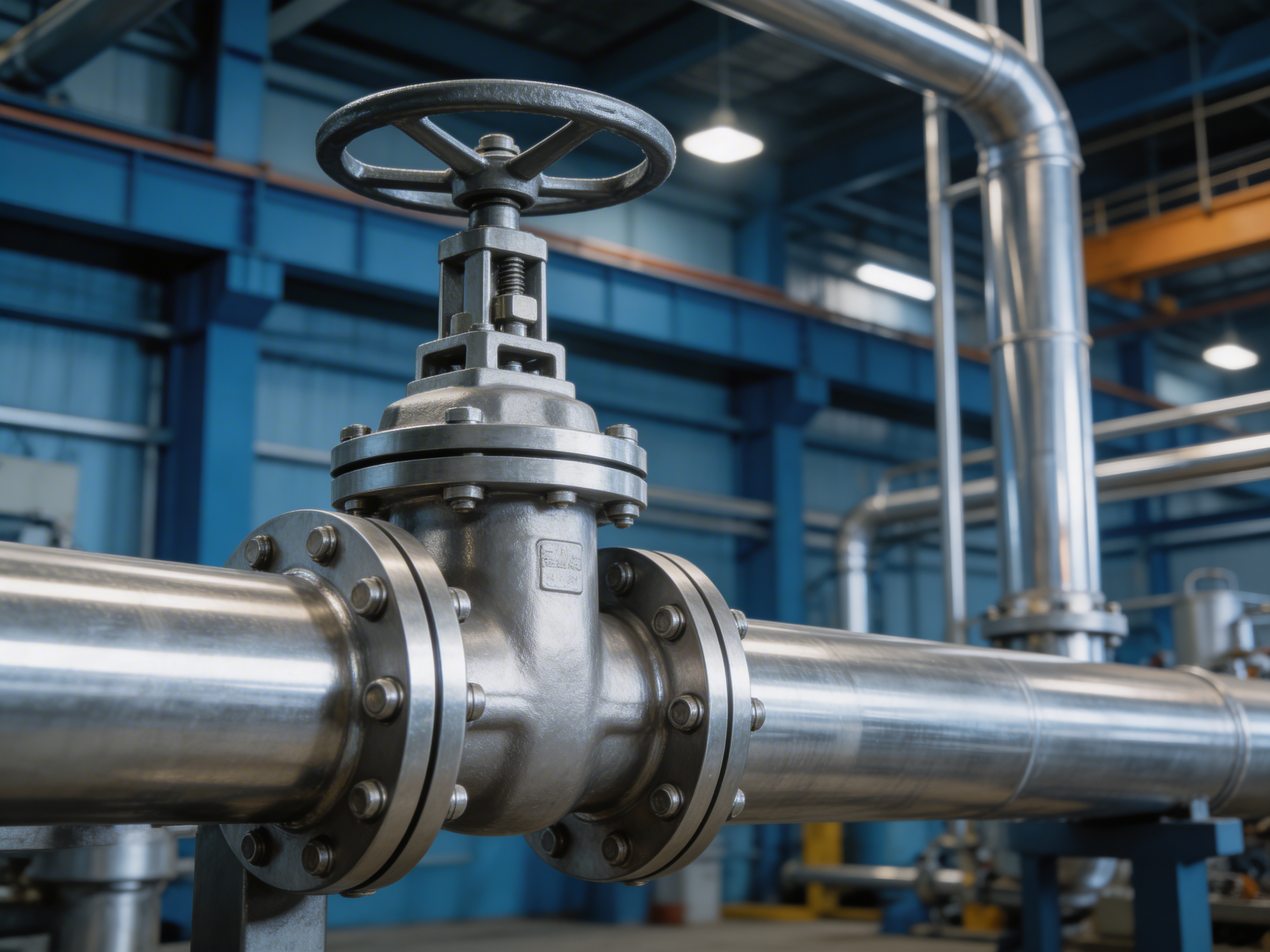
According to COVNA's application database of 5,000+ installations, globe valves are deployed across diverse industrial sectors. The following table illustrates the primary applications and recommended valve configurations for each industry. For automated control applications, consider integrating solenoid valves or pneumatic valve systems with your globe valve installations.
| Industry | Application | Recommended Type | Key Requirements |
|---|---|---|---|
|
Oil & Gas |
Production control, refining |
Y-Type, High-pressure |
API 6D, fire-safe |
| Chemical | Process control, mixing | Z-Type, Corrosion-resistant | PTFE lining, Alloy materials |
| Power Generation | Steam regulation, bypass | Y-Type, High-temp | ASTM A217 WC6/WC9 |
| Water Treatment | Flow control, distribution | Z-Type, Ductile iron | AWWA C500, NSF 61 |
| Pharmaceutical | Sanitary process control | Z-Type, 316L SS | FDA compliance, electropolish |
| Marine | Ballast, cooling systems | Angle-Type, Bronze | ABS/DNV certification |
Material Selection Guide
| Material | ASTM Grade | Max Temperature | Corrosion Resistance | Typical Service |
|---|---|---|---|---|
|
Carbon Steel |
A216 WCB |
425°C (800°F) |
Limited | Steam, oil, gas |
| Stainless Steel 304 | A351 CF8 | 538°C (1000°F) | Good | General chemical |
| Stainless Steel 316 | A351 CF8M | 538°C (1000°F) | Excellent | Chloride service |
| Alloy 20 | A351 CN7M | 316°C (600°F) | Superior | Sulfuric acid |
| Duplex 2205 | A995 4A | 316°C (600°F) | Excellent | Seawater, brine |
Advantages and Limitations
| Advantages | Limitations |
|---|---|
|
Excellent throttling capability |
Higher pressure drop than gate/ball valves |
|
Precise flow control |
Not suitable for slurry or particulate service |
| Good for frequent operation | Flow direction must be observed |
| Reliable shutoff capability | Slower operation than quarter-turn valves |
| Wide range of sizes and materials | Higher torque requirements for large sizes |
Installation and Maintenance
Proper installation and maintenance are critical for maximizing globe valve service life and ensuring reliable operation. COVNA recommends following these guidelines based on our 26+ years of field experience. For pressure regulation applications, you may also want to review our guide on pressure control valve systems.
| Maintenance Task | Frequency | Action Required |
|---|---|---|
|
Visual Inspection |
Monthly |
Check for leaks, corrosion, damage |
| Stem Lubrication | Quarterly | Apply compatible lubricant |
| Packing Adjustment | As needed | Tighten gland nuts if leakage occurs |
| Seat Inspection | Annually | Check for wear, erosion, scoring |
| Full Overhaul | 3-5 years | Replace seals, inspect trim components |
Frequently Asked Questions
What is the main difference between a globe valve and a gate valve?
A globe valve is designed primarily for throttling and flow regulation, featuring a disk that moves perpendicular to the flow path. A gate valve is designed for full open/close isolation with minimal pressure drop when open. Globe valves have higher flow resistance but offer precise control, while gate valves provide better sealing for isolation service.
When should I use a Y-type globe valve instead of a Z-type?
Y-type globe valves are preferred in high-pressure applications and services with erosive or viscous fluids. The angled design reduces pressure drop by approximately 25-30% compared to Z-type valves, making them more energy-efficient for continuous operation in demanding conditions such as boiler feedwater and high-pressure steam systems.
Can globe valves be used for slurry applications?
Standard globe valves are generally not recommended for slurry or particulate-laden fluids due to the tortuous flow path that can cause erosion and clogging. For such applications, COVNA recommends specialized valve designs such as knife gate valves, pinch valves, or ball valves with full port design.
What is the typical service life of a globe valve?
According to COVNA's field data from 5,000+ installations, properly selected and maintained globe valves typically achieve 15-25 years of service life in standard industrial applications. High-cycle applications may require more frequent maintenance, while severe service conditions (extreme temperatures, corrosive media) may reduce service life proportionally.
How do I determine the correct globe valve size for my application?
Proper globe valve sizing requires calculating the required flow coefficient (Cv) based on maximum flow rate, pressure differential, and fluid properties. COVNA's engineering team provides complimentary valve sizing calculations using industry-standard methods (ISA/IEC 60534). Contact our technical support with your process conditions for accurate sizing recommendations.
Conclusion
Globe valves remain essential components in industrial fluid control systems, offering unmatched capabilities for throttling and flow regulation applications. Understanding the different types—Z-type, Y-type, and Angle-type—enables engineers to select the optimal configuration for specific operational requirements.
With 26+ years of experience and 5,000+ successful installations worldwide, COVNA provides comprehensive globe valve solutions engineered to meet the most demanding industrial requirements. Our ISO 9001, CE, and RoHS certified manufacturing processes ensure consistent quality and reliable performance across all product lines.
For technical assistance with globe valve selection, sizing, or application engineering, contact COVNA's technical support team. Our engineers are available to provide detailed specifications, CAD drawings, and application-specific recommendations to ensure optimal valve performance in your system. Also explore our butterfly valve guide and solenoid vs pneumatic valve comparison for complementary valve technologies.
COVNA: Your trusted partner for industrial valve solutions. German technology, global reach, local service.