




























PCV Valve: Complete Technical Guide to Positive Crankcase Ventilation Systems
Introduction to PCV Valve Technology
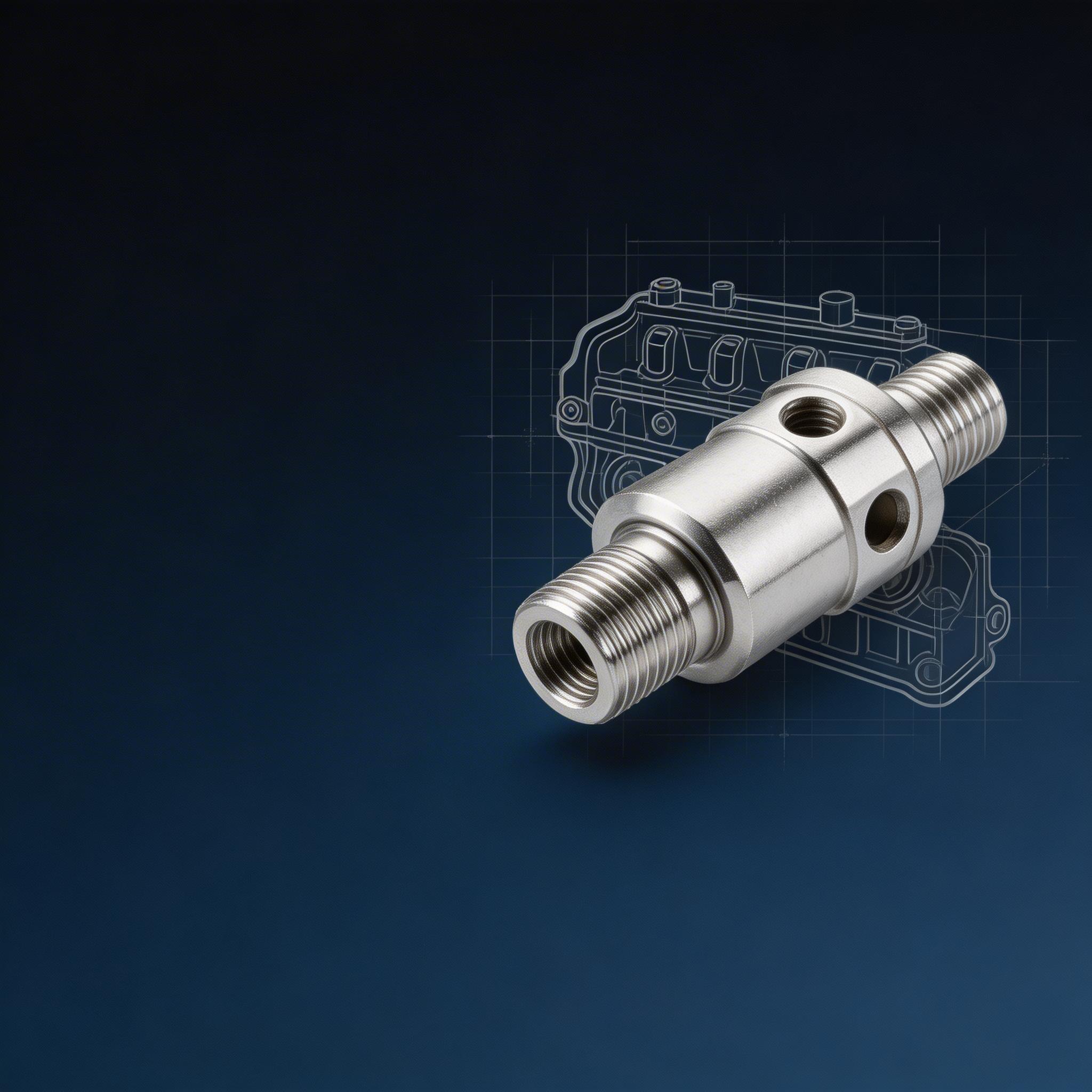
The positive crankcase ventilation valve is a critical component in modern internal combustion engines. This emissions control device manages pressure buildup within the engine crankcase while preventing harmful hydrocarbons from escaping into the atmosphere. COVNA Valve's engineering team has observed that proper PCV valve selection directly impacts engine performance metrics across automotive, marine, and industrial applications.
Engine crankcases generate substantial pressure during normal operation. Blow-by gases—unburned fuel and combustion byproducts—seep past piston rings and accumulate in the crankcase. Without effective ventilation, this pressure damages seals, degrades lubricant quality, and creates safety hazards. The PCV valve provides a controlled pathway for these gases to return to the intake manifold for complete combustion.
How PCV Valves Work: Technical Mechanism
Pressure Differential Operation
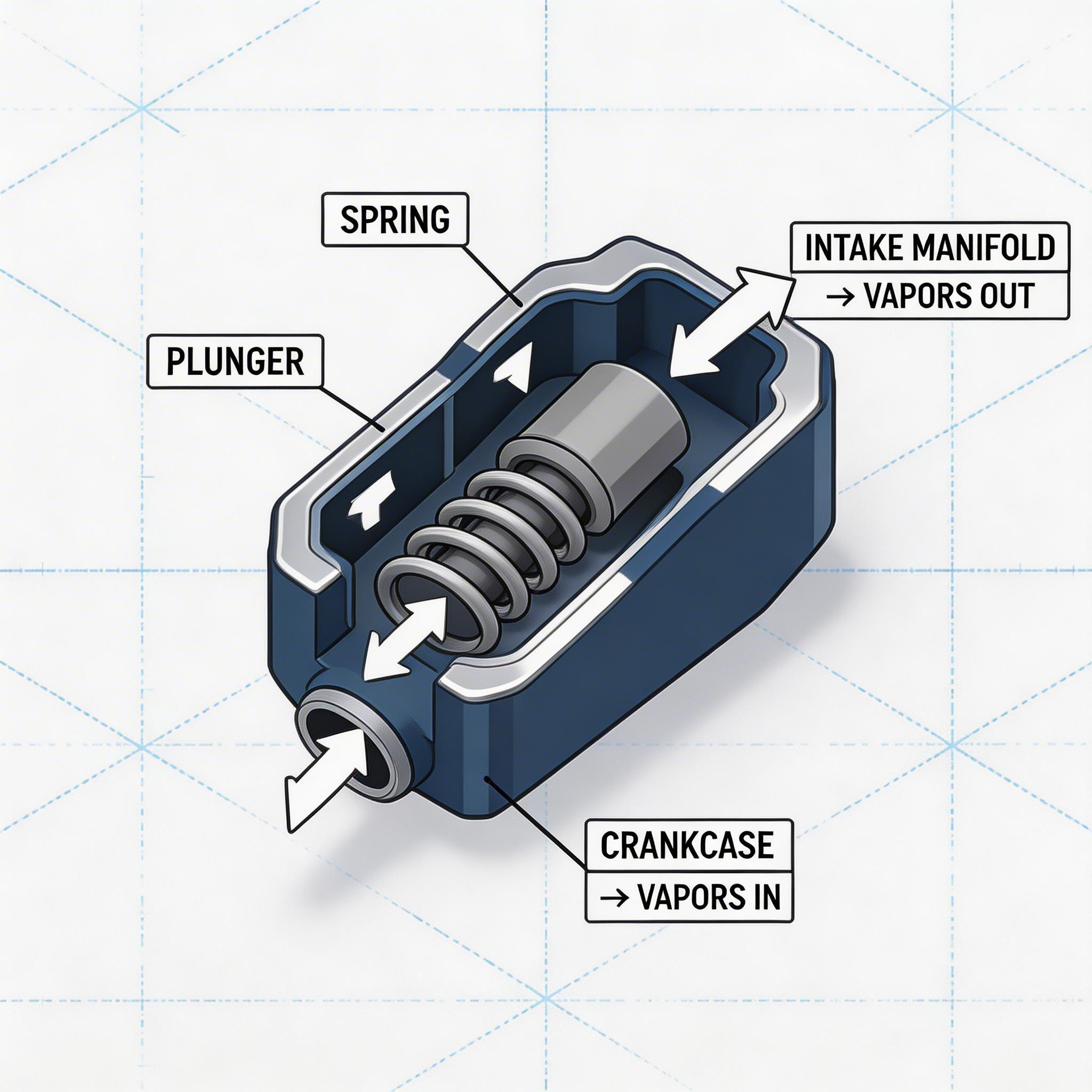
PCV valves function based on intake manifold vacuum. When the engine operates at idle or low load, high vacuum pulls the valve plunger upward against spring tension. This opens a small metering orifice that allows minimal crankcase vapor flow. The restricted opening prevents excessive lean conditions in the intake mixture.
During acceleration or high-load conditions, manifold vacuum decreases significantly. The internal spring extends the plunger, opening a larger flow path. This accommodates increased blow-by production that accompanies higher cylinder pressures and temperatures. The variable orifice design maintains optimal crankcase ventilation across all operating ranges.
Flow Rate Specifications
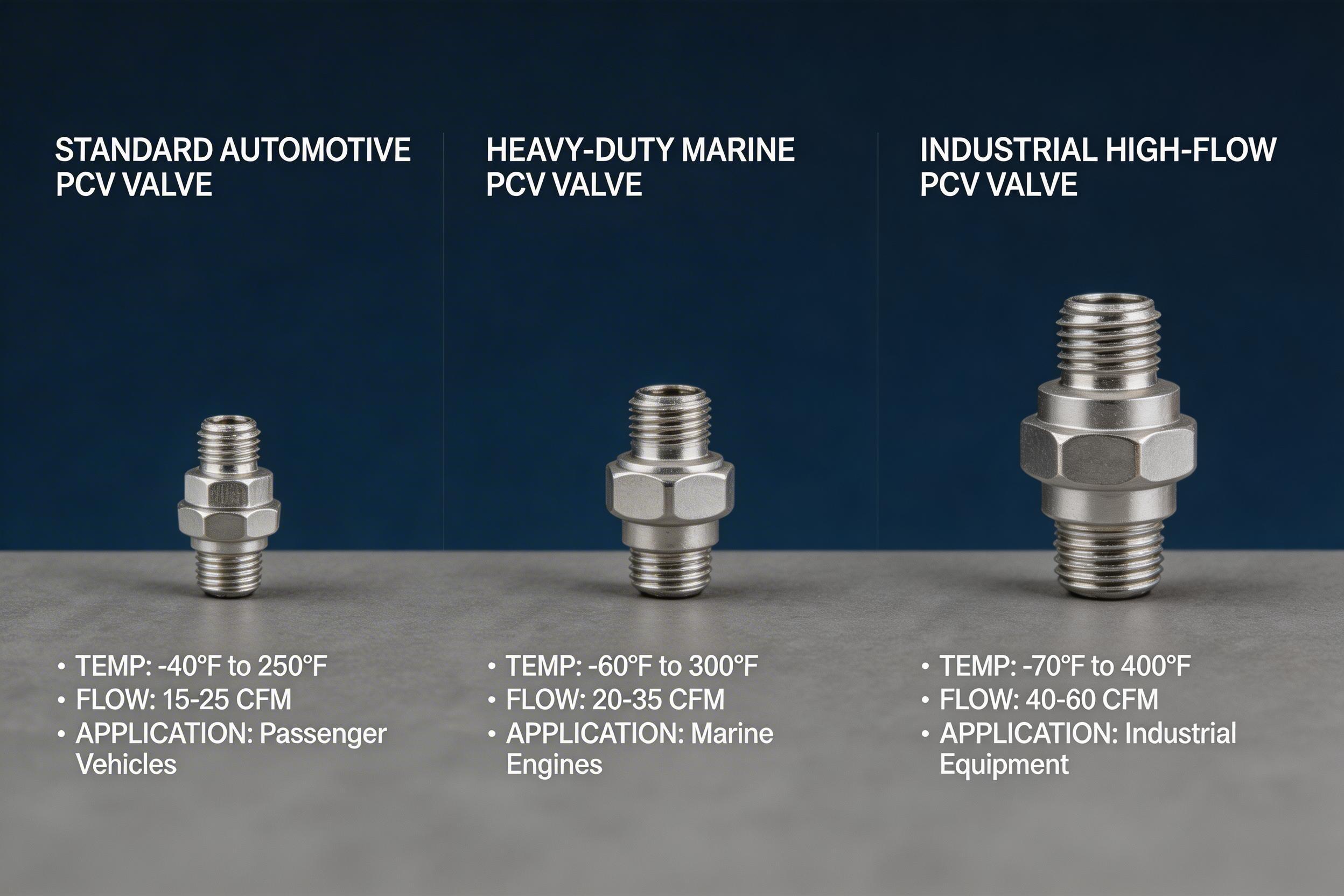
Standard automotive PCV valves typically flow between 3-10 cubic feet per minute (CFM) depending on engine displacement and operating conditions. Heavy-duty applications may require flow rates exceeding 15 CFM. COVNA Valve's industrial PCV solutions accommodate flow requirements up to 50 CFM for large stationary engines and marine propulsion systems.
Flow capacity selection depends on several engineering factors:
- Engine displacement and cylinder configuration
- Expected blow-by rates at maximum brake mean effective pressure
- Intake manifold vacuum characteristics
- Operating temperature ranges
- Altitude compensation requirements
PCV Valve Types and Applications
Standard Fixed Orifice Valves
Basic PCV valves use a fixed orifice design with spring-loaded plunger mechanisms. These economical solutions suit mass-produced automotive engines with predictable operating parameters. The fixed calibration simplifies manufacturing while providing adequate crankcase ventilation for standard duty cycles.
Variable Flow PCV Valves
Advanced applications demand variable flow capability. These valves incorporate multiple metering stages or progressive valve opening characteristics. Marine engines benefit particularly from variable flow designs due to varying load conditions encountered during navigation. COVNA Valve's marine-grade PCV products feature corrosion-resistant materials and salt spray protection exceeding ASTM B117 standards.
Heated PCV Valves
Cold climate operation presents unique challenges. Moisture condensation in crankcase vapors can freeze within PCV valves, causing complete blockage. Heated PCV valves integrate electrical heating elements that maintain operating temperatures above freezing. These specialized components prove essential for engines operating in Arctic conditions or extended cold-soak periods.
Industrial and Stationary Applications
Stationary engines for power generation, pumping stations, and compression facilities require robust PCV solutions. These applications often feature:
- Extended service intervals (10,000+ operating hours)
- High-temperature environments (exceeding 150°C ambient)
- Vibration resistance for reciprocating machinery
- Compatibility with synthetic lubricants and fuel blends
PCV Valve Failure Modes and Diagnostics
Common Failure Symptoms
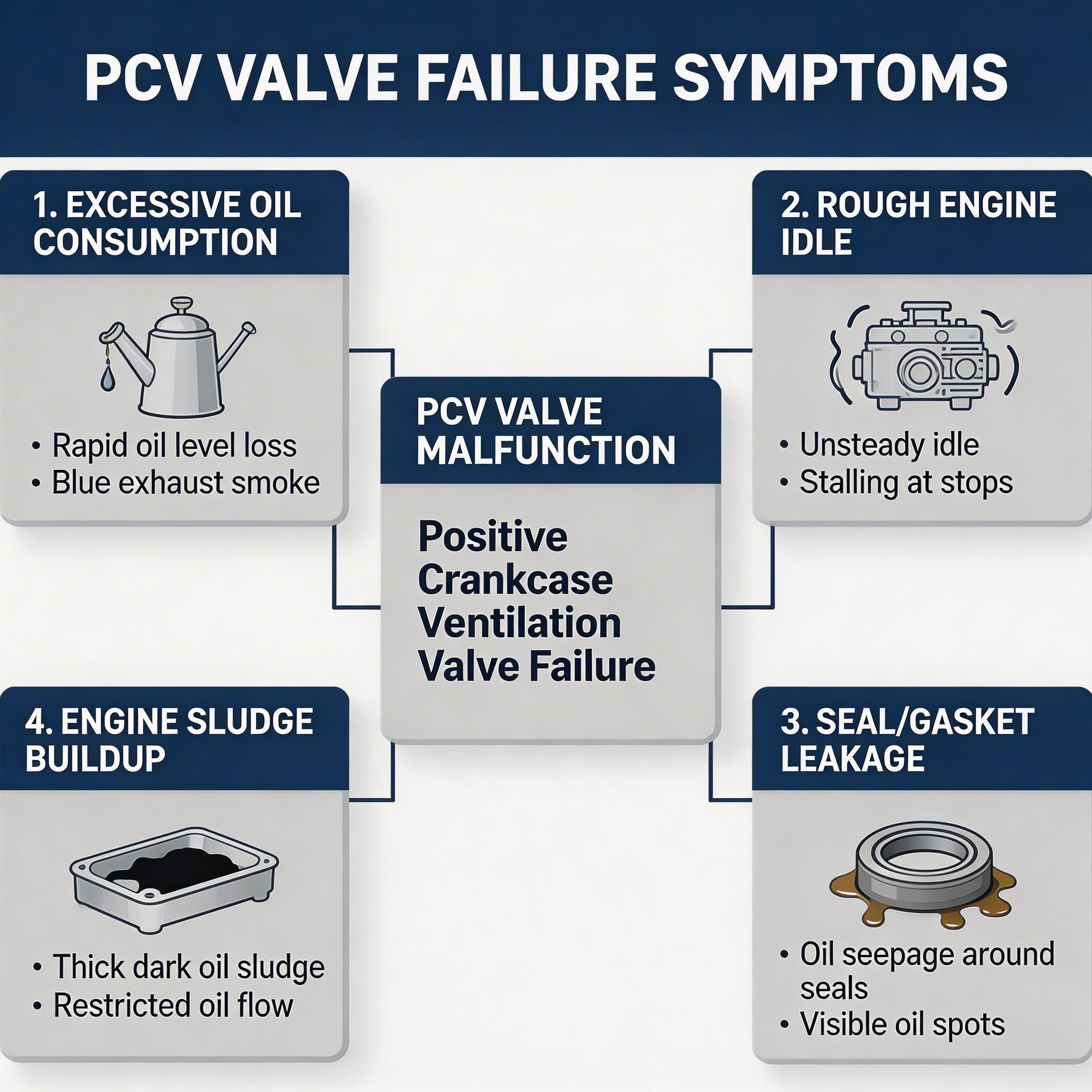
PCV valve malfunction manifests through several observable indicators:
Increased Oil Consumption: A stuck-open valve creates excessive intake vacuum on the crankcase. This draws lubricating oil past seals and into the combustion chambers. Oil consumption rates may increase 200-500% above normal specifications.
Rough Idle and Stalling: A stuck-closed valve allows crankcase pressure buildup. This pressure forces air-fuel mixture dilution into the crankcase, creating lean operating conditions. Idle quality degrades noticeably, with potential stalling during deceleration.
Seal Leakage: Excessive crankcase pressure from valve blockage damages main seals, valve cover gaskets, and camshaft seals. Oil leaks appear at multiple locations simultaneously, often misdiagnosed as individual seal failures.
Sludge Accumulation: Inadequate ventilation allows moisture and combustion acids to accumulate in lubricating oil. This accelerates oxidation and sludge formation, reducing oil service life and increasing engine wear rates.
Diagnostic Procedures
Technicians should perform systematic PCV valve testing:
- Visual Inspection: Remove the valve and check for sludge blockage, damaged hoses, or cracked housings
- Shake Test: A functional valve produces audible rattling from the internal plunger
- Flow Testing: Apply regulated vacuum and verify valve opens/closes at specified pressures
- Crankcase Pressure Measurement: Install a pressure gauge and verify negative pressure at idle (typically -2 to -4 inches water column)
PCV Valve Selection Criteria
Material Specifications
Valve body materials must withstand continuous exposure to:
- Hot oil vapors (up to 150°C)
- Fuel dilution and chemical additives
- Condensed moisture and acids
- Vibration and mechanical shock
COVNA Valve manufactures PCV components from glass-filled nylon, brass, and stainless steel depending on application requirements. Marine and industrial variants utilize 316 stainless steel internals for maximum corrosion resistance.
Connection Standards
Common PCV valve connection types include:
- 3/8" and 1/2" hose barb fittings
- M12x1.5 and M14x1.5 metric threads
- 1/8" NPT and 1/4" NPT pipe threads
- Quick-connect fittings for OEM assembly
Flow Capacity Matching
Undersized PCV valves create excessive crankcase pressure. Oversized valves admit unmetered air, disrupting fuel mixture calibration. Proper sizing requires:
- Engine displacement calculation
- Blow-by rate estimation (typically 0.5-1.5% of total piston displacement)
- Safety margin for high-load conditions (minimum 25% excess capacity)
Installation Best Practices
Hose Routing
PCV hoses require careful routing to prevent:
- Kinking that restricts flow
- Contact with hot exhaust components
- Accumulation of condensed liquids in low points
- Abrasion against sharp edges or vibrating surfaces
COVNA Valve recommends reinforced silicone hoses for high-temperature applications. Minimum bend radius should exceed 3x hose diameter to prevent flow restriction.
Filter Maintenance
Many PCV systems incorporate intake air filters that require periodic replacement. Clogged filters create excessive flow restriction equivalent to valve blockage. Service intervals typically range from 15,000 to 30,000 miles for automotive applications, with more frequent inspection required in dusty environments.
Environmental and Regulatory Compliance
PCV systems originated from environmental regulations addressing hydrocarbon emissions. The U.S. Clean Air Act of 1963 mandated crankcase emission controls, with PCV technology becoming standard by 1968. Modern EPA and CARB regulations continue tightening allowable emissions, driving PCV valve precision and durability requirements.
COVNA Valve's PCV product line meets or exceeds:
- EPA Tier 3 and Tier 4 emission standards
- CARB OBD-II monitoring requirements
- EU Stage V non-road engine regulations
- IMO MARPOL marine emission protocols
Applications and Real-World Usage
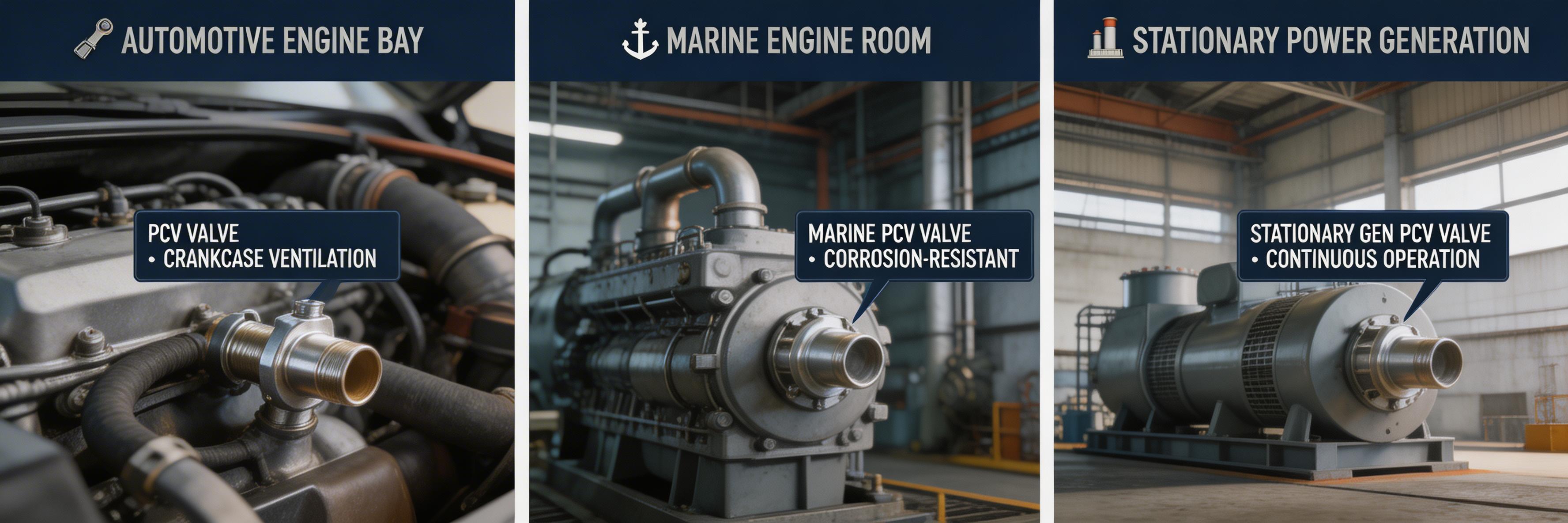
PCV valves serve critical functions across diverse applications:
Automotive: Passenger vehicles, light trucks, and commercial fleets rely on PCV systems for emission compliance and engine longevity. Modern vehicles integrate PCV monitoring into onboard diagnostics, triggering fault codes when flow rates deviate from calibrated parameters.
Marine: Marine engines operate in corrosive saltwater environments with varying load profiles. COVNA Valve's marine PCV solutions feature enhanced corrosion protection and robust construction for extended service intervals between overhauls.
Industrial Power Generation: Stationary engines for backup power, prime power, and co-generation facilities demand PCV valves capable of 10,000+ hour service intervals. These applications prioritize reliability and minimal maintenance requirements.
Maintenance Schedules and Service Life
Automotive Applications
Standard PCV valve replacement intervals range from 30,000 to 50,000 miles depending on manufacturer specifications. However, severe service conditions warrant more frequent inspection:
- Short-trip driving with insufficient engine warm-up
- High-idle applications (taxi, delivery vehicles)
- Operation in dusty or high-humidity environments
- Use of alternative fuels (E85, CNG, propane)
Industrial Equipment
Stationary engines and industrial machinery typically follow maintenance schedules based on operating hours:
- Light duty: 2,000-hour inspection intervals
- Medium duty: 1,000-hour inspection intervals
- Heavy duty: 500-hour inspection intervals
COVNA Valve recommends establishing baseline crankcase pressure measurements during normal operation. Significant pressure increases indicate PCV system degradation requiring service.
Advanced PCV System Configurations
Turbocharged and Supercharged Engines
Forced induction creates unique PCV challenges. During boost conditions, intake manifold pressure exceeds crankcase pressure, potentially reversing flow direction. These applications require:
- Check valves preventing boost pressure entry into crankcase
- Dual-path PCV systems with separate idle and boost circuits
- Oil separators preventing turbocharger contamination
- Increased flow capacity for higher blow-by rates
Hybrid and Start-Stop Vehicles
Frequent engine cycling in hybrid vehicles creates thermal shock conditions. PCV valves must withstand rapid temperature transitions without seal degradation or material fatigue. Specialized compounds and design features address these demanding requirements.
Conclusion
The PCV valve serves as a small but essential component in modern engine emission control systems. Proper selection, installation, and maintenance directly impact engine longevity, oil consumption, and regulatory compliance. COVNA Valve's comprehensive PCV product range addresses applications from passenger vehicles to marine propulsion and industrial power generation. Engineering teams seeking optimal crankcase ventilation solutions should evaluate flow requirements, material compatibility, and environmental conditions when specifying PCV components.
For technical consultation regarding specific PCV valve applications, contact COVNA Valve's engineering support team with engine specifications and operating parameters.
Technical Specifications Summary
| Parameter | Standard Automotive | Heavy Duty | Industrial |
|---|---|---|---|
| Flow Range | 3-10 CFM | 10-20 CFM | 20-50 CFM |
| Temperature Rating | -40°C to 120°C | -40°C to 150°C | -50°C to 200°C |
| Material | Glass-filled Nylon | Brass/Steel | 316 Stainless |
| Service Life | 50,000 miles | 100,000 miles | 10,000 hours |
Keywords: PCV valve, positive crankcase ventilation, engine emissions control, crankcase pressure, blow-by gas, automotive valves, marine PCV valve, industrial ventilation